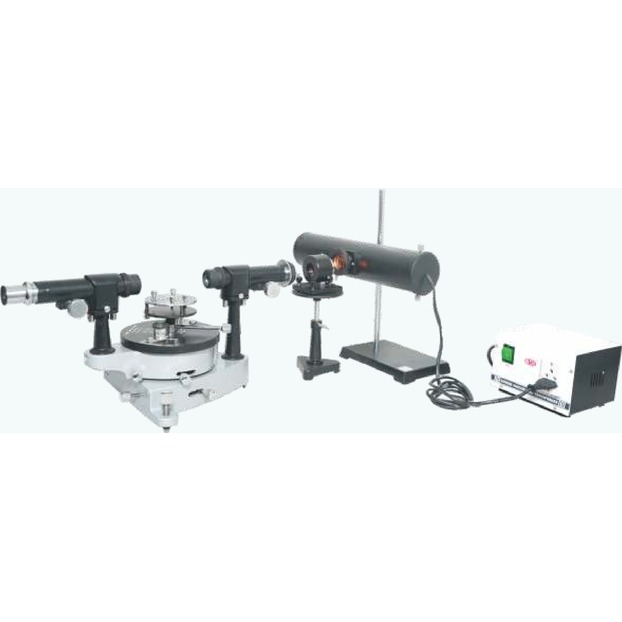
EDSER BUTLER PLATE
A very simple device which is easy to make and has proved invaluable as a 'universal' demonstration of multiple-beam interference effects is the Edser-Butler plate.
A very simple device which is easy to make and has proved invaluable as a 'universal' demonstration of multiple-beam interference effects is the Edser-Butler plate. Interference fringes are formed by multiple reflections in an air gap between two partially silvered glass surfaces known as Edser-Butler fringes, which are visible as a series of alternating bright and dark bands.
An Edser-Butler plate is made up of two optically flat glass plates that are partially coated with a thin layer of a reflective material (like silver). These plates are placed with a small, controlled air gap between them.
When light passes through the plate, it undergoes multiple reflections within the air gap between the two surfaces. These multiple reflections lead to interference patterns.